Why Your Petrol, Cooking Gas and Dal Are Getting More Expensive — The Iran War Explained Simply
Why Your LPG, Petrol and Dal Are Getting More Expensive Right Now The Iran War Explained Simply
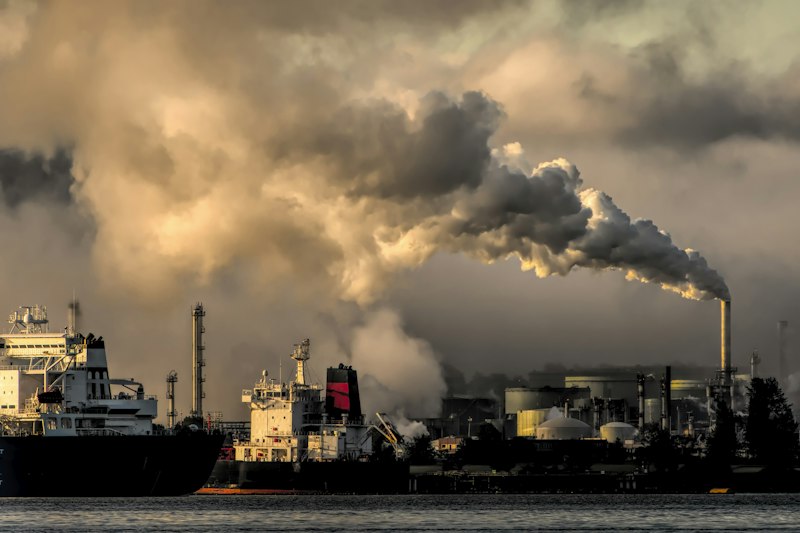
A war between the United States and Iran began on February 28 2026. Most Indians followed the early news and then moved on. But the economic effects of that war have been quietly building for six weeks and are now being felt in the most ordinary parts of daily Indian life. The price of cooking gas. The cost of petrol. The price of the vegetables and pulses you buy every week. None of this is a coincidence and none of it will resolve quickly.
This post will explain the chain of events simply and honestly, without political opinion or jargon, so you understand exactly why this distant conflict has reached your household budget.
The Numbers That Show How Much Has Already Changed
These numbers are not abstract economic statistics. They directly translate into what happens at the petrol pump, at the gas agency, and at your local vegetable market. Understanding the connection between a war in the Middle East and your monthly household budget is one of the most practically useful things any Indian can understand right now.
What Is the Strait of Hormuz and Why Does It Matter So Much to India
Imagine a narrow corridor of sea, only 39 kilometres wide at its narrowest point, sitting between the coast of Iran on one side and Oman on the other. Every day, roughly 20 million barrels of oil and enormous quantities of cooking gas pass through this corridor on tanker ships headed to Asia. If this corridor is blocked or made too dangerous to use, one fifth of the world's entire oil supply has nowhere to go.
This is the Strait of Hormuz. And since early March 2026, it has been effectively closed to normal commercial shipping because of the war between the United States and Iran. Iran has used drones and other methods to make commercial tanker ships too risky to transit through the strait. Insurance companies have refused to cover ships travelling through it. The result is that oil and gas that would normally flow freely from the Gulf to Asia is severely restricted.
How the War Happened A Simple Timeline
How Every Part of Your Daily Life Is Being Affected
1 Cooking Gas LPG Cylinder Price
India gets 91 percent of its LPG from the Gulf. Qatar and the UAE are the two largest suppliers. With the Strait of Hormuz closed and LNG shipments halted from Qatar, India's LPG supply chain was directly and severely hit. The government ordered refineries to stop making other petrochemical products and use all available propane and butane to produce cooking gas for households instead.
Despite these emergency measures, LPG cylinder prices have risen by Rs 60 in the past month. Households across Tamil Nadu and the rest of India are already paying this increase. If the disruption continues through summer, further increases are possible.
2 Petrol and Diesel Prices
India imports approximately 85 percent of its crude oil. When crude oil prices rise from $65 to $110 per barrel in under two months, the cost of producing petrol and diesel increases correspondingly. Indian oil marketing companies including BPCL, HPCL, and IOC are currently absorbing part of this increase by selling fuel at a loss to prevent immediate retail price shocks. However, this cannot continue indefinitely.
If crude prices remain at current levels through May 2026, a petrol price increase at the pump becomes increasingly likely. Airlines including IndiGo have already announced fare increases because aviation turbine fuel, which they cannot subsidise the way the government can subsidise household fuel, has risen dramatically. Every flight you take in the next few months will cost more because of this war.
3 Dal, Vegetables and Food Prices
The food price impact works through two channels. First, imported dal and pulses are now 10 to 15 percent more expensive because the rupee has weakened due to the oil shock. India imports significant quantities of pulses from Canada and Africa, and a weaker rupee means these imports cost more in Indian currency even if the global price has not changed.
Second, diesel price increases make transport more expensive across the entire food supply chain. The truck that brings vegetables from a farm in Nashik to a market in Chennai uses diesel. When diesel gets more expensive, that cost is passed through the supply chain and eventually reaches the consumer as a price increase on vegetables that have nothing directly to do with the war.
4 Everything Else That Uses Fuel or Plastic
The oil price impact does not stop at fuel and gas. Crude oil is the raw material for plastics, synthetic fabrics, fertilisers, paint, chemicals, and hundreds of other everyday products. When crude oil costs 70 percent more than it did two months ago, the cost of every product made from or transported using oil-derived materials increases.
Fertiliser prices are rising, which will affect the next agricultural season's costs for farmers and eventually food prices. Paint and construction materials are becoming more expensive. Packaging costs for food companies are increasing. All of these increases will eventually show up on retail shelves over the coming weeks and months.

How India Is Responding
The Indian government and Indian companies are not sitting still. Several responses are already underway that are reducing the severity of the impact.
| Response | What It Does | How Long It Helps |
|---|---|---|
| Buying oil from West Africa and Latin America | Replaces some lost Gulf supply with oil from alternative sources | Partial relief now, takes weeks to scale |
| Increasing coal power generation | Reduces the power sector's dependence on gas, freeing gas for household use | Active now through summer |
| Subsidising retail fuel prices | Prevents immediate petrol and diesel price shock for consumers | Sustainable for 2 to 3 months before pressure builds |
| Emergency LPG production diversion | All available propane and butane diverted to household cooking gas | Helps maintain supply but cannot offset full shortfall |
| UAE and Saudi Arabia alternative routes | Some Gulf oil is reaching India via pipelines bypassing the strait | Limited capacity cannot replace full strait volumes |
What Happens Next Honest Assessment
A ceasefire was announced on April 8 and the Strait of Hormuz was briefly opened. But ship traffic remained far below normal levels weeks later. Tanker operators and insurance companies are still charging enormous war risk premiums for ships travelling through the region. Even when a ceasefire holds, rebuilding confidence in the shipping route takes months.
Analysts at Kpler, a respected energy market research firm, estimate that even if the conflict fully resolves in the coming weeks, crude oil prices are unlikely to return to pre-war levels for months because strategic reserves in consuming countries need to be rebuilt and supply chains need to normalise. The $85 to $95 range is considered the realistic floor for oil prices for the rest of 2026, significantly above the $64 to $65 that prevailed before the war.
This means Indian households should realistically expect elevated fuel and cooking gas prices through at least the middle of 2026, with gradual normalisation in the second half of the year if the ceasefire holds.
The Simple Version of a Complex Situation
A war between the United States and Iran closed a narrow stretch of sea that carries one fifth of the world's oil supply. India depends on that oil and gas more than almost any other large economy and has less reserve cushion than most. The result is a direct and unavoidable transmission from a military conflict thousands of kilometres away to the price of the cylinder in your kitchen, the fuel in your vehicle, and the dal in your pantry. This is not political. It is geography and economics working exactly as they always have. The good news is that a ceasefire is holding as of mid-April 2026 and the worst-case scenarios of sustained $150 oil have not materialised. The less good news is that the impact on Indian household budgets will be felt for several more months at minimum regardless of how quickly the political situation resolves, because energy markets move slowly in both directions.
Frequently Asked Questions
Why did LPG prices increase in India in 2026?
India sources 91 percent of its LPG from Gulf countries, primarily Qatar and the UAE. The 2026 Iran war caused the closure of the Strait of Hormuz, disrupting the shipping of LPG from the Gulf to India. With supply constrained and global cooking gas prices rising, LPG cylinder prices in India increased by approximately Rs 60 in the weeks following the war's beginning in late February 2026. The Indian government ordered emergency measures to prioritise household LPG production, but full offset of the supply disruption was not possible.
Will petrol prices increase in India because of the Iran war?
Indian oil marketing companies are currently absorbing part of the crude oil price increase by selling fuel at a loss to prevent immediate retail price shocks. This is sustainable for a limited period. If crude oil prices remain above $100 per barrel through May and June 2026, a retail petrol and diesel price increase becomes increasingly likely. Aviation fuel prices have already been passed through to consumers in the form of higher airline ticket prices, as those are not subsidised.
What is the Strait of Hormuz and why does it affect India?
The Strait of Hormuz is a narrow sea passage, only 39 kilometres wide at its narrowest point, between Iran and Oman. Approximately 20 million barrels of oil and large volumes of LNG cooking gas pass through it every day on tanker ships headed to Asia. When Iran disrupted commercial shipping through this strait in March 2026, it effectively blocked one fifth of global oil supply and a large share of the LNG that India depends on for cooking gas. Because India imports 85 percent of its crude oil and 91 percent of its LPG, this disruption hit India harder and faster than most other economies.
Why are dal and food prices rising in India in 2026?
Food prices are rising through two main channels. First, the weakening of the Indian rupee caused by the oil shock makes all imports more expensive in Indian currency, including pulses imported from Canada and Africa. Dal prices are already 10 to 15 percent higher as a result. Second, diesel price increases raise transport costs across the entire food supply chain, adding to the final retail price of fruits, vegetables, and other produce that has nothing directly to do with the war itself.
How long will prices stay high in India because of the Iran war?
Even with the ceasefire announced on April 8 2026, energy market analysts expect crude oil prices to remain significantly above pre-war levels for the rest of 2026. The current realistic range is $85 to $110 per barrel versus $64 before the war. Indian household fuel and food prices are unlikely to return to pre-war levels before mid-2026 at the earliest, and a full return to pre-war conditions depends on sustained peace, the rebuilding of strategic reserves, and the restoration of normal commercial shipping confidence through the Strait of Hormuz.
📚 BrainBuzz explains the news, the science, and the real-world impact of big events on ordinary Indian life in plain language.


Comments
Post a Comment