By BrainBuzz Team | March 2026 | Life and Generation | 10 min read
I Was 18 When COVID Lockdown Hit India Here Is What It Did to Our Entire Generation Forever
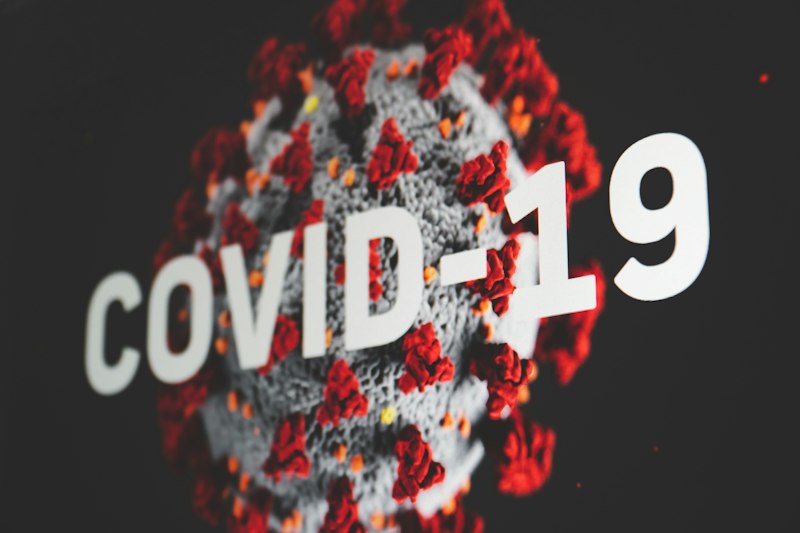
Six years ago today, a voice came through every television and phone speaker in India at the same time. 21 days. Stay home. And just like that, the world stopped. I was 18. My board exams had just been cancelled. My college admission was uncertain. My grandmother was in a city I could not reach. And outside the window, the streets that had never been silent in my entire life were completely empty. Six years later I am still figuring out what that did to me. And I suspect you are too.
March 24 2020. The date sits in the memory of every Indian who was young enough to have their formative years shaped by what followed. Not just the 21 days that became months. Not just the masks and the sanitiser. But the deeper, less visible things. The things we lost that never came back. The ways we changed that we did not notice until much later.
This is not a post about COVID statistics or government policy. There are thousands of those. This is a post about what happened to the generation of Indians who were between 15 and 25 when the lockdown hit. What it took from us. What it accidentally gave us. And why so many of us still feel its weight six years later without fully understanding why.
The Day Everything Stopped Where Were You?
I remember exactly where I was. I was at a friend's house. We were studying for board exams that would never happen. Someone's phone buzzed with a news alert. Then another. Then another. We watched the Prime Minister's address on a small phone screen, four of us crowded around it, not fully understanding what we were hearing.
Within hours everything changed. My friend went home. The auto rickshaws stopped running. The shops pulled down their shutters. And I walked back to my house through streets that felt like a film set after everyone has gone home. That silence. That eerie, total silence in a country that is never silent. That is what I remember most.
"I kept waiting for it to feel normal. But normal never came back. What came back was a different version of everything, and I had to learn to live in it without anyone teaching me how."
If you are reading this and you were between 15 and 25 in March 2020, you know exactly what I am talking about. You felt it too. That specific feeling of a door closing behind you that you did not even know was a door until it was already shut.
What the Numbers Say About Our Lost Years
15 Cr
Indian students whose education was severely disrupted by the pandemic, many of whom never fully caught up academically
2 years
Average time Indian youth between 18 and 25 lost from normal social development, career building, and formative experiences
67%
Indian youth who report that the pandemic permanently changed how they relate to other people and to uncertainty
3x
Increase in anxiety and depression among Indian youth aged 15 to 24 between 2020 and 2022, much of which persists today
But numbers cannot capture what was actually lost. Numbers cannot count the last day of school that nobody knew was the last day. The farewell that never happened. The college festival that was cancelled and never rescheduled. The first job interviews that became screen calls in bedrooms. The friendships that quietly faded during months of isolation and never fully recovered.
The Things We Lost That Nobody Warned Us About
2020
We Lost Our Endings and Beginnings
Every important stage of young life has two parts. The ending of what came before and the beginning of what comes next. Finishing school and starting college. Finishing college and starting work. These transitions matter. They are the moments where one version of yourself closes and a new one opens. They are full of ritual, ceremony, and shared experience that help your brain and heart process the change.
We had none of that. Board exams were cancelled or changed beyond recognition. Farewell ceremonies never happened. College orientation happened on muted Zoom calls. Graduation ceremonies were postponed for two years or replaced with photographs sent by courier. The rituals that help young people process becoming adults were stripped away entirely.
What this created was a generation with incomplete closures. Many of us left school without properly leaving it. We entered adulthood without properly entering it. We started college without the experience of starting college. These missing transitions leave a specific kind of incompleteness that is hard to name but very easy to feel.
The Tamil Nadu experience specifically: For Tamil Nadu students, 2020 was the year of Class 12 board exams and entrance exams for engineering and medical colleges. The cancellation and restructuring of these exams created enormous uncertainty at the most critical academic moment of these students' lives. Many families spent months not knowing whether their child's entire college future was secured or in jeopardy. That uncertainty, sustained for months, left marks that are still visible in how that generation relates to planning and the future.
2020 to 2021
We Lost Two Years of Social Learning
Between the ages of 15 and 25, human beings do some of the most important social learning of their entire lives. How to navigate group dynamics. How to handle conflict with peers. How to build and lose friendships. How to exist in shared spaces with strangers who become familiar. How to read a room. How to be bored together. How to celebrate together. How to comfort someone in person.
This learning happens through thousands of small daily interactions that are mostly invisible while they are happening. The argument in the college canteen that you work through. The group project where you have to manage different personalities. The party where you do not know many people and have to find your social footing. The shared experience of something difficult that builds bonds with the people around you.
Our generation missed two to three years of this. Not because we were incapable of social learning but because the environment that provides it was removed entirely. Online interactions during the pandemic were a substitute but they could not replicate the full sensory, embodied experience of being physically present with other human beings in uncontrolled situations.
What this looks like six years later: Many people from this generation describe social situations as feeling more effortful than they expected. Meeting new people takes more energy than it seems to for older generations. Large gatherings feel more overwhelming. Maintaining friendships requires more conscious effort. These are not character flaws. They are the predictable outcomes of two years of missed social practice during the critical developmental window when that practice matters most.
2021 to 2022
We Lost Our Relationship with the Future
Before 2020, young Indians had a complicated but fundamentally optimistic relationship with the future. It was uncertain and competitive and demanding. But it was there. You could plan for it. You could work toward it. You could believe that if you did the right things, the future would more or less respond as expected.
The pandemic destroyed that assumption completely. Carefully laid plans became meaningless overnight. Working hard toward a goal provided no protection against forces completely outside your control. The future turned out to be something that could be cancelled with four days notice by a virus nobody had heard of six months before.
This experience rewired something fundamental in how our generation thinks about planning, commitment, and long-term investment. Many of us developed what psychologists call future uncertainty avoidance. We became less willing to make long-term plans because we had learned, viscerally and personally, that long-term plans can be made irrelevant overnight.
How this shows up in 2026: This generation delays major commitments more than previous generations. Longer to commit to relationships, careers, cities, and decisions that feel permanent. This is not laziness or immaturity. It is a rational adaptation to having experienced the world as fundamentally unpredictable during the years when the brain was forming its model of how safe it is to plan for the future.

What the Lockdown Accidentally Gave Us
This is the part that is harder to talk about because it risks sounding like toxic positivity. But it would be dishonest to write about the COVID generation without acknowledging what the lockdown also gave some of us, alongside everything it took.
| What Was Taken |
What Some of Us Found Instead |
| Social calendars filled with obligations |
Time to discover what we actually enjoyed when nobody was watching |
| The pressure to perform normalcy constantly |
Permission to exist quietly and without social performance for the first time |
| Clear career paths and expectations |
The collapse of those paths forced genuine thinking about what we actually wanted |
| Physical freedom and mobility |
Deep familiarity with our own minds, homes, and inner lives |
| The illusion of control over outcomes |
A more honest relationship with uncertainty and impermanence |
Many people from this generation discovered skills, interests, and aspects of themselves during lockdown that they might never have found in the noise of normal life. The person who started cooking seriously. The one who read 30 books in six months. The one who learned to code, or draw, or write, or produce music, because suddenly there was time and no external schedule filling every hour.
These discoveries were real and they mattered. But they came at a cost that should not be minimised or forgotten.
Why We Still Feel It Six Years Later
The most common thing I hear from people my age is a version of this: I cannot explain it exactly, but something still feels slightly off. Not dramatically wrong. Just slightly incomplete. Like a photograph that is almost in focus but not quite.
This feeling is real and it has a name. Psychologists who study disaster and collective trauma call it ambiguous loss. It describes grief for things that were lost but were never clearly defined, never properly mourned, and never replaced with any kind of ceremony or acknowledgment.
We did not grieve the cancelled exams. We did not mourn the missed farewells. Nobody held a ceremony for the years that disappeared. We were told to be grateful we were healthy. We were told others had it much worse. Both of these things were true and both of them prevented us from properly acknowledging our own, real losses.
Something worth saying directly: If you still feel the weight of those years and you do not know why, you are not weak or ungrateful. You experienced something genuinely difficult during years that mattered enormously for your development. That is allowed to have left a mark. Acknowledging the mark does not mean you are not resilient. It means you are honest.
What This Generation Got Right That Nobody Credits
Here is something I believe deeply and do not hear said enough. The COVID generation of Indian youth showed extraordinary adaptability under conditions that no previous generation of young Indians had faced.
We adapted to completely broken educational systems while still completing degrees. We entered the worst job market in decades and found ways to build skills, earn income, and create opportunities that did not exist before. We developed comfort with digital tools and remote work that gave us advantages in the changing workplace. We became more conscious of mental health, more honest about emotional difficulty, and more willing to seek help than any previous Indian generation.
We did this without templates. Without guides who had been through what we were going through. Without any map for the territory we found ourselves in. And most of us did it without fully falling apart, which given everything, is genuinely remarkable.
Six Years Later A Note to Everyone Who Was Young in 2020
If you were between 15 and 25 on March 24 2020, you belong to a generation that lost something significant and gained something unexpected and are still figuring out how to integrate both. The incomplete transitions, the lost social years, the changed relationship with the future these are real. They are not excuses or weaknesses. They are the honest legacy of two years lived in genuinely extraordinary circumstances during the most formative period of your life. You are allowed to still be processing it. You are allowed to name the losses even six years later. And you are also allowed to recognise that what you built in and after those empty, silent, frightening months is something genuinely yours. Something earned in conditions that nobody chose and most people, given the choice, would not have wished for. That makes it worth something that is hard to put into words but very easy to feel.
Frequently Asked Questions
How did COVID lockdown affect Indian youth mentally?
Research from TISS and NIMHANS found that Indian youth aged 15 to 24 experienced a threefold increase in anxiety and depression between 2020 and 2022. The effects included disrupted educational milestones, loss of social development opportunities, increased screen dependency, and a fundamentally altered relationship with future planning and certainty. Many of these effects persist six years later in the form of social anxiety, difficulty with long-term commitment, and a pervasive sense of incompleteness around important life transitions that were missed.
What did students lose during the COVID lockdown in India?
Beyond the obvious losses of classroom education and exams, Indian students lost critical developmental experiences including proper farewells and transitions between life stages, formative social learning through daily peer interaction, college festivals and shared cultural experiences, campus life and its associated identity formation, and the psychological security of believing that hard work leads to predictable outcomes. Many of these losses were never acknowledged or mourned, contributing to the ongoing feeling of incompleteness many in this generation describe.
Why does the COVID generation in India struggle with social situations?
The period between 15 and 25 is when humans do the most intensive social learning of their lives. Two to three years of significantly reduced in-person social interaction during this window meant missed practice in the thousands of small daily social situations that build confidence, skill, and intuition in human interaction. Online interaction provided connection but could not replicate the full learning that happens through physical presence and uncontrolled social environments. The result is that many people from this generation find social situations require more conscious effort than they expect.
Is it normal to still feel affected by COVID 6 years later?
Yes, completely normal and supported by psychological research. Collective trauma from significant shared experiences does not resolve on a fixed timeline. The COVID lockdown affected formative years for millions of young Indians simultaneously, creating what psychologists call a cohort effect where an entire generation shares similar unresolved experiences. Feeling the weight of those years six years later does not indicate a problem. It indicates that the experience was significant enough to have lasting impact, which it genuinely was.
How can the COVID generation in India heal and move forward?
The most important first step is naming and acknowledging what was actually lost rather than minimising it with comparisons to those who had it worse. Creating personal rituals or acknowledgments for milestones that were missed can provide the closure that was denied at the time. Rebuilding social confidence through gradual, low-pressure social exposure helps rewire the avoidance patterns that isolation created. And recognising the genuine strengths built during that period adaptability, digital fluency, self-awareness, resilience as real and earned rather than defaulting to seeing only what was lost.
Related Articles You Will Find Useful
📚 BrainBuzz covers honest stories, life insights, and practical guides for Indian readers navigating a world that changed faster than anyone expected.
👉 Read more on BrainBuzz


Comments
Post a Comment